
Become like little children
This is still going round my head: if Jesus asks us to ‘change and become like little children’, what does that mean? How do I take this seriously?
Here’s a little exercise to start with. This is a list of synonyms for ‘childlike’. If we read them slowly and prayerfully, which stand out, and why? Are there some you already exhibit? Are there some you’re drawn to? Notice where Jesus takes you…

And perhaps this will also help. Here is a list of antonyms, of what it means to not be childlike. Again, let’s invite the Holy Spirit to speak to us, to lay his finger on anything that he wants us to notice and to address.

It’s pretty revealing, isn’t it?
For me, the one that leaps out is the idea of genuineness – of unvarnished authenticity. As someone who loves people-pleasing and struggles to find self-worth apart from the things I do, this is a real challenge. Just be me? Without editing, filtering, or earning your approval first?
Your response may well be different. You might even think I’ve got the lists wrong – after all, my selection of words will depend on what is impactful for me. That’s fine. It’s the pondering, the being still and listening, that counts.
To help me take this further, I’ve been thinking about the kids I know. Hanging out with them, watching them, listening. Pondering. And I’ve ended up with a list of thoughts. There are twelve of them.
I can’t think about them all at once, but as I look down the list I can ask Daddy what he wants me to be thinking about right now. Maybe as you prayerfully read these, one or two will jump out at you, as the ones that currently hold a key, where you can take some simple steps to obey what Jesus, in his perfect love, has told us to do.
1. Cultivate friendship with children, and with childlike adults – we need to be intentional about time with people who make this easier for us. If we have children in our lives, we can commit to time together, and to genuinely being with them, entering into their world rather than asking them to accommodate to ours. And we can ask our friends to help us. Tell them what childlike traits we admire in them, and deliberately spend time in activities that bring these out. Identify a childlike trait we want to grow in, and tell them, so they can cheer us on.
Walk with the wise and become wise – Proverbs 13:20

2. Enjoy being curious. Children aren’t scared of questions; they don’t censor their curiosity. We all know stories of a really inappropriate question being posed at full volume at exactly the wrong time…! So if we feel a question might make us look silly, let’s ask it anyway. Practise being unembarrassed, or acting unembarrassed, when we don’t know something. Measure ourselves by how much we learn, not by how much we know. That might be a great evening conversation: what did you learn today?
It is the glory of God to conceal things, but the glory of kings is to search things out – Proverbs 25:2

3. Remember what it felt like to be confident in absolute adult competence. Can you pinpoint the event that made you realise the grownups actually didn’t know everything? Maybe it was a harsh lesson; maybe you were let down. Maybe this was the first of many incidents that meant you’ve grown a hard protective shell of distrust to protect your tender heart. If this brings back something really painful, I’m so sorry you had to go through that. But there is good news. Our Daddy really does know it all – so we can go back to that wonderful world of total trust. Watch little children – they believe what they’re told, they are ‘certain of what they cannot see’, they know the absolute bottom line is, “My mummy said so!”. And for us that really us true. So we can practise taking God at his word. Find the promises that you need to believe, and cling to them.
The Lord is trustworthy in all he promises and faithful in all he does – Psalm 145:13

4. Consider the emotional highs and lows of two year old. Within seconds they can go from abject sadness to squeals of delight. Have you seen a toddler, with a tear still on her cheek, break into an enormous grin as the whole world is made right again? I’m not suggesting we are triggered by a baked bean falling over – we are not called to childishness, after all – but if we’re being childlike, we need to stop throttling back our feelings and living behind a mask of, “Fine, thanks” – or worse, believing that’s actually true. When did you last give your soul time to unburden, and recognise the emotions you’re carrying inside? Ruth Haley Barton encourages us to do just this*, not to censor or change how we feel but just to recognise the whole truth of who we are. We can laugh and we can cry, let our emotions be shown – to ourselves, to our Daddy, and to a few people we trust. We can stop hiding.
Rejoice with those who rejoice; mourn with those who mourn – Romans 12:15

5. Rejoice in dependence; this is how it’s meant to be. A toddler comes back to their parent every few minutes for reassurance, or to show them something, or simply to flop in their arms for a cuddle. There is a quiet contentment in simply being close. We can live life with this kind of connection to our Daddy. Kids know that they don’t know everything, and they also know that’s the way it’s meant to be. They don’t lean on our own understanding, but rest in the understanding of others. Even the questions they ask are often more about seeking connection than about obtaining information – “Wow!” they say, and run off to the next exciting thing. Kids can grow and explore and learn out of joy, not out of the fear that pushes us to self-sufficiency or the insecurity that drives us to compare and compete. There is a beautiful humility in this. We aren’t meant to be the big one, the strong one, the capable one. That’s our Daddy’s job.
Trust in the Lord with all your heart and lean not on your own understanding – Proverbs 3:5

6. Step back from the planning or the fretting, and enjoy what is good in each moment. Children are entranced by the little thing that’s right in front of them; they focus on what brings them joy. They fill their minds with what is good; they don’t distract themselves in worry, comparison or care. When we are bored, jaded, cynical or anxious – when we’re far from childlike – we need to find something bigger than ourselves, and let it overwhelm our souls with awe. It could be physically bigger: a mountain – the sea – a storm – the stars – or we can take something small and let it fill our horizon – get very close to a flower, lie down and look at a field of grass, stand under a tree and gaze at the leaves dancing in the wind.** How can we bring more awe into our routines?
Whatever is true, whatever is noble, whatever is right, whatever is pure, whatever is lovely, whatever is admirable—if anything is excellent or praiseworthy—think about such things – Philippians 4:8

7. Remember, again and again, that we are loved. More loved than we can imagine. We’ll never be able to disappoint God, he’ll never be in a bad mood, we don’t ever need to earn favour. He loves us because he loves us, because that’s his character. We are defined by our Daddy’s love for us; that’s our identity. When we forget, come back (straight away!) for a top up of delight and affection and pure joy. Read and remember what our Daddy says about us – especially when the world us unkind, and when we are unkind to ourselves.
I have loved you with an everlasting love – Jeremiah 31:3

8. Practise trust. You know how a little kid will take a flying leap off the sofa and never even think about what would happen if you didn’t catch him? Our Daddy has never dropped anyone, never looked away, never been sleepy, or grumpy, or had a bad back. We can KNOW our Daddy will catch us. We don’t need to know all the plans or understand all the circumstances (imagine a 3 year old asking those questions – it’s just as ridiculous when we do it!). Meals will come, fun will come, rest will come. Trials will come too, he promised us those – but nothing will ever overwhelm us. We are with Daddy, who loves us, who gives what is good and who turns even what is bad in this broken world to our good.
The eyes of the Lord are on those who fear him, on those whose hope is in his unfailing love – Psalm 33:18

9. Dressing up! Yes, really. Kids love exploring new identities; it’s fun but it’s also an important element in their development as they try out other ways of being. We aren’t fixed either. The justification God gives us happens in a moment when we accept his gift of grace; the transformation he is working will continue throughout our lives. We can work with him – try out new things, behaviours, experiences. There are gifts out there for us that we just need the courage to taste, to test, to try. We need to be open. Expect to change all the time, to grow, to mature, to develop our faith.
He who began a good work in you will carry it on to completion until the day of Christ Jesus – Philippians 1:6
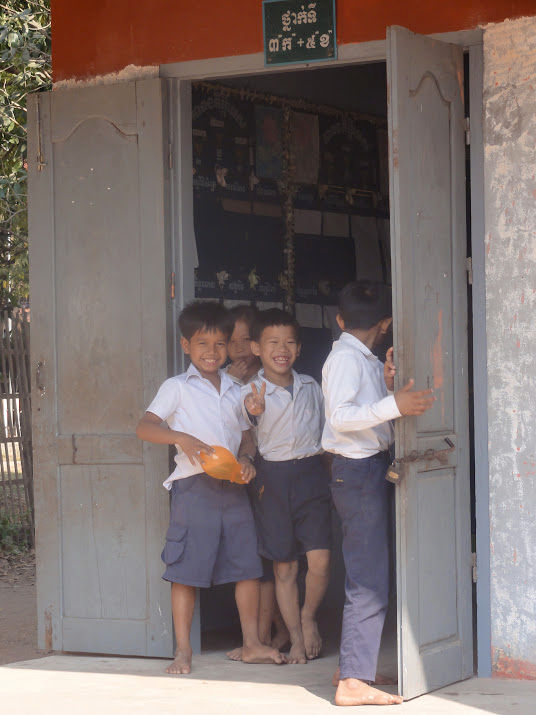
10. Look forward with expectancy. Wouldn’t our days be different if we lived with the refrain, “What’s next, Daddy?!”. We can bring him ideas with joy; we don’t need to censor them ourselves, he’ll bring to fruition whatever is good. And we can ask for what we dream of; ask with the persistence of a child, it’s OK to ask and ask and ask – he told us to! We’re not twisting the arm of a reluctant grump though; remember who we’re asking. On that basis we can be full of hope. And let’s guard our thinking: kids don’t steward a list of disappointments that drains their future dreams, and neither should we.
May the God of hope fill you with all joy and peace as you trust in Him, so that you may overflow with hope by the power of the Holy Spirit – Romans 15:13

11. Say sorry. Say it quickly, say it a lot. If you watch kids, they know that it works – a genuine ‘sorry’ puts things right; they say it and then they get straight back to whatever activity they were engaged in – the issue is gone. How life-changing this one could be! The flip side is to accept ‘sorry’ from others; we need to quickly forget slights and move on, keep no record of wrongs to mull on or bring up later. It takes practice. And perhaps hardest of all, we also need to forgive ourselves. We need God’s help. That’s OK, he freely gives it to all who ask.
Forgive as the Lord forgave you – Colossians 3:13

12. Finally. Most of all. Kids are amazing at expressing love. They just say it – and show it – they don’t hold back, don’t figure it all out first. However it comes out, even if it’s a very wobbly drawing –they just give authentically of who they really are. Have you ever received a strange gift or an odd compliment from a child? You accepted it, right? Because love doesn’t have to be beautifully giftwrapped. Even if it’s a bit odd or awkward – when it’s accepted it changes lives. We need to offer love, to all, to each other, to God, to our own selves. Openly, without self-censoring so we won’t cry / feel awkward / make a fool of ourselves. Like a child. Yes, loving like this does make us vulnerable**** – but we have a father protecting us too.
If I… do not have love, I gain nothing – 1 Corinthians 13:1-3

One final thought. It is also childlike to resemble your parents. Holly used to get me to look through her photo album and asked every time we turned a page, “What do you think Bob? Do I look like my mam?” She really did – but for her, the resemblance was a source of pain and longing – a reminder that she wasn’t living with the person she most wanted to. Her identity was splintered, and she was powerless to fix it.
But we are the opposite. We didn’t know who we were, or whose we were, but our adoption by God means we have a new identity. And just like a child adopted into a human family, we can grow in likeness to our Daddy as we learn what it is to be loved by him. Our behaviour, our reactions, our words, our thoughts can all be shaped to resemble our Daddy. What an incredible thought that is!
In his second letter to the church at Corinth, who were a real mess in many ways, Paul affirms that despite their shortcomings, the resemblance was real. This is what he writes:
And we all, who with unveiled faces contemplate the Lord’s glory, are being transformed into his image with ever-increasing glory, which comes from the Lord, who is the Spirit – 2 Corinthians 3:18.
What is his image? What is he like? Well, many of the things we’ve said above are also true of him. He is full of joy and hope; he is the ‘I AM’, present tense, found in this present moment; he is emotionally open; he lives free from comparison; he enjoys eternal belovedness within the Trinity; he is forgiving… And above all, he is love.
When the Almighty God came to earth, he chose to be born as a baby, and he spent more time as a child than as an adult. He welcomed children to him even when his disciples did their best to shoo them away. Perhaps we shouldn’t be surprised to find so many echoes of childlikeness in the heart of God himself.


* See Invitation to Soliture and Silence, Ruth Haley Barton. This exercise is part of her recommendation for days of retreat. I love this book!
** See https://www.crosswalk.com/faith/spiritual-life/ways-to-cultivate-a-childlike-faith-as-an-adult.html
*** This phrase is taken from the blog post: https://redeeminggod.com/childlike-faith-matthew-18-3/.
**** It is not loving to enable someone to abuse you – if you need help please reach out to someone you trust. I can’t say that strongly enough.


Comments